
MY STORY
Rebuilding with purpose
An honest account of where I have been, what I learned from it, and why it shapes the way I work today.
WHERE I STARTED
Long before technology
I began as an ASE- and GM Master-Certified automotive technician, and a type-1 diabetic who learned early how to manage a body that does not always cooperate. In the shop I specialized in the work others gave up on — intermittent electrical faults, drivability concerns no one could reproduce, and custom fabrication — and I built race cars and hotrods along the way. That trade taught me to trust evidence over assumptions and to keep working a problem until I found its true cause. A chronic illness eventually forced me to retire from it.
HONESTY FIRST
Some systems fail slowly. Mine did too.
For a stretch of years, declining health, depression, and the inability to hold steady work compounded until I could no longer see a workable future. I have learned to say that plainly, because pretending otherwise helps no one.
ACCOUNTABILITY
Accountability comes first
That period included a mental-health crisis, a standoff with law enforcement, and nearly three years of incarceration. I live with that truth. I take responsibility for it, and I have built the years since around consistent choices that reflect who I am now — not who I was on my worst day.
A CAUSE HIDDEN IN PLAIN SIGHT
The diagnosis that changed everything
As a type-1 diabetic, a chronic and debilitating gastrointestinal condition was long assumed to be diabetic gastroparesis. During that same time away, with cannabis fully out of my system, the illness went into complete remission. The evidence ultimately pointed to cannabinoid hyperemesis syndrome — a condition in which cannabis use can produce severe, recurring nausea, vomiting, and abdominal illness. Finding the real cause reframed years of my life, and it is the clearest proof I know that treating symptoms is not the same as solving a problem.
ADVOCACY & A NEW DIRECTION
From the statehouse to the server room
Earlier, medical cannabis had been part of how I managed my health when conventional medicine fell short, and I became active in advocacy and political organizing — work that contributed to the reform of New Jersey’s cannabis laws. Helping fellow activists with their technology is what pulled me into IT. With guidance from mentors I remain grateful for — Daniel Frieling, the documented inventor of what became the electronic medical record (EMR); Sean Vernon of SunLife Solar; and Jon Vaughn of Tier5 Software — I found my footing, and today I serve as Chief Technology Officer of Electronic Enterprises, Inc. (EECONS). The same root-cause discipline I had used in the shop translated directly to code, servers, and networks.
WHY THIS BELONGS HERE
What I bring to every problem now
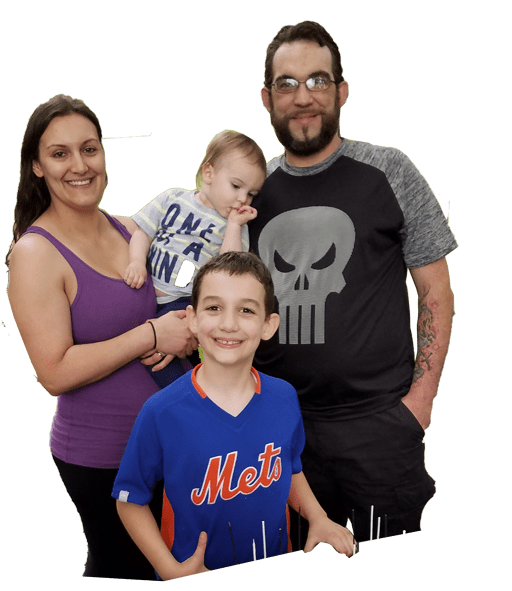
Technology work is problem-solving under constraints: gather facts, challenge assumptions, isolate causes, stabilize the system, and rebuild carefully. I bring more patience, humility, and persistence to that work than I ever did before, because I know exactly what happens when warning signs are ignored. I am rebuilding MPWard Enterprises to serve clients well, create durable value, and secure a better future for my children. I am not asking anyone to overlook my past — I am asking to be judged by the honesty of this account, the quality of my work, and the consistency of the life I build from here.
A note on mental health. A crisis can narrow a person’s view until impossible choices feel inevitable. They are not. Anyone in immediate danger or considering self-harm should contact emergency services or the 988 Suicide & Crisis Lifeline in the United States. Seeking help is an act of responsibility, not weakness.
Judge me by the work.
If you want to see the discipline in action, start with a straight, root-cause look at your own systems.